

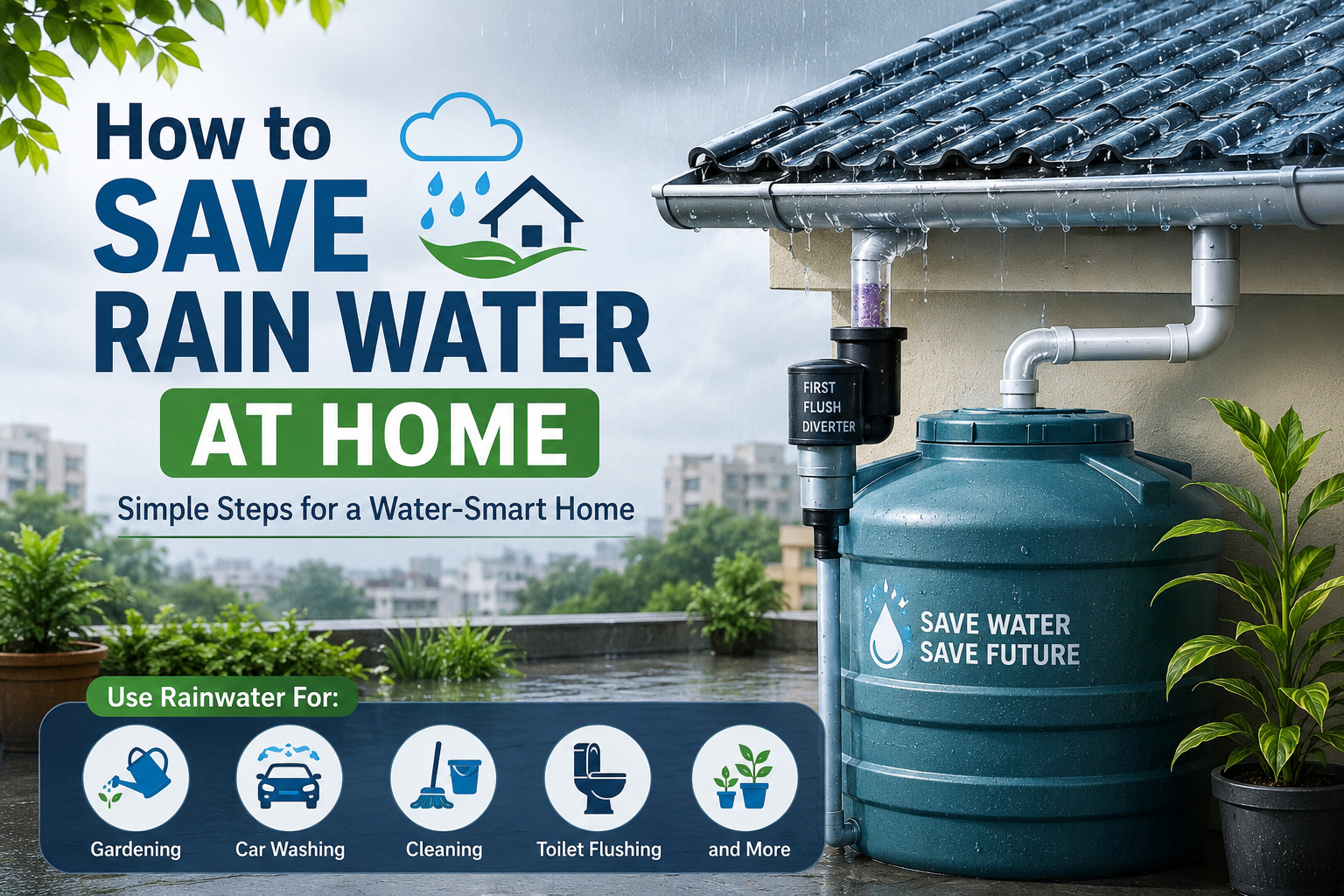
Every year, India receives millions of liters of rainwater during the monsoon. Unfortunately, much of this precious water flows into drains and is wasted. At the same time, many cities and villages face water shortages during the summer.
The good news is that you can make a difference by collecting and using rainwater at home. Rainwater harvesting is not just for large buildings or farms. Even a small home or apartment can save thousands of liters of water every year.
In this guide, you’ll learn simple and practical ways to save rainwater at home, its benefits, common mistakes to avoid, and how to use it safely.
What Is Rainwater Harvesting?
Rainwater harvesting means collecting rainwater from your roof, balcony, or open space and storing it for future use instead of letting it go down the drain.
The collected water can be used for:
- Watering plants
- Washing vehicles
- Cleaning floors
- Flushing toilets
- Gardening
- Groundwater recharge
With proper filtration and treatment, rainwater can also be made suitable for drinking.
Why Should You Save Rainwater?
Saving rainwater offers many benefits for both your family and the environment.
1. Reduces Water Bills
If you use stored rainwater for gardening, cleaning, or washing your car, you’ll use less municipal or borewell water.
Example:
A family that washes their car twice a week can save hundreds of liters of tap water every month by using rainwater.
2. Helps During Water Shortages
Many Indian cities experience water cuts during summer.
Having stored rainwater means you’ll have an extra source of water when supply becomes limited.
Example:
If your society receives water only once a day, stored rainwater can be used for cleaning and gardening without affecting your drinking water supply.
3. Recharges Groundwater
Instead of storing all rainwater, you can direct some of it into the ground through recharge pits.
This helps:
- Raise groundwater levels
- Improve borewell performance
- Reduce dependence on water tankers
4. Prevents Urban Flooding
Heavy rainfall often causes water logging because roads and drains cannot handle large amounts of water.
Rainwater harvesting reduces the amount of runoff entering drainage systems.
Even one house collecting rainwater contributes to reducing local flooding.
5. Good for Plants
Rainwater is naturally soft and doesn’t contain chlorine like treated tap water.
Many gardeners notice healthier flowers and vegetables when using rainwater.
Example:
Your rose plants or vegetable garden may grow better with stored rainwater compared to chlorinated tap water.
How Can You Save Rainwater at Home?
There are several easy methods depending on your home.
Method 1: Collect Water from Your Roof
This is the most common method.
What You’ll Need
- Roof
- Rain gutters
- Downpipe
- First-flush diverter
- Filter
- Storage tank
How It Works
Rain falls on the roof.
↓
Water flows into gutters.
↓
The first dirty rainwater is diverted away.
↓
The remaining clean water passes through a filter.
↓
Water gets stored in a tank.
Example:
If your roof area is around 1,000 sq. ft., you can collect thousands of liters of water during one good rainfall.
Method 2: Use Buckets or Drums
If you don’t want to install a complete system, you can simply place:
- Plastic drums
- Water tanks
- Buckets
- under roof pipes.
Although basic, this method still helps save a significant amount of water.
Best for:
- Small houses
- Rental homes
- Villages
Method 3: Balcony Rainwater Collection
Apartment residents can also save rainwater.
You can collect water flowing from balcony shades using containers and use it for:
- Indoor plants
- Balcony cleaning
- Washing mops
Even saving 20–30 liters every rainfall adds up over an entire monsoon.
Method 4: Rain Barrels
Rain barrels are becoming popular in many countries and are now available in India too.
These are specially designed containers connected to roof gutters.
Benefits:
- Easy installation
- Low maintenance
- Covered to keep mosquitoes away
Method 5: Recharge Pit
Instead of storing water, you can send it back into the ground.
A recharge pit is a hole filled with:
- Gravel
- Sand
- Stones
Rainwater slowly enters the soil and increases groundwater levels. This method is excellent for homes with limited storage space.
How Much Rainwater Can You Save?
Many people don’t realize how much water can be collected.
Here’s a simple example.
Roof Size: 100 square meters
Annual Rainfall: 800 mm
Potential Rainwater Collection:
Around 80,000 liters per year
Even after accounting for losses, most homes can collect over 60,000 liters annually.
That’s enough water for many household activities.
What Is a First-Flush System?
The first rain after a long dry period carries:
- Dust
- Bird droppings
- Leaves
- Dirt
- Pollution
A first-flush diverter allows this dirty water to flow away before clean rainwater enters your storage tank.
It is one of the most important parts of a rainwater harvesting system.
Should Rainwater Be Filtered?
Yes.
Even though rain starts clean, it can pick up dirt from roofs and pipes.
A simple filtration system usually contains:
- Mesh screen
- Sand
- Gravel
- Activated carbon
For drinking purposes, rainwater should also be:
- Boiled
- UV treated
- RO purified if necessary
Never drink untreated rainwater directly.
Best Uses of Stored Rainwater
Collected rainwater is perfect for:
Gardening
Keeps plants healthy while saving tap water.
Washing Vehicles
Rainwater leaves fewer water spots compared to hard water.
Cleaning Floors
Excellent for mopping and outdoor cleaning.
Toilet Flushing
One of the biggest water-saving opportunities in every home.
Washing Outdoor Areas
Driveways, terraces, balconies, and patios can all be cleaned using rainwater.
Common Mistakes to Avoid
Not Cleaning the Roof
Leaves and bird droppings can contaminate the water.
Clean your roof before the monsoon begins.
Using Open Storage Tanks
Open tanks attract:
- Mosquitoes
- Dust
- Insects
Always keep storage tanks covered.
Skipping the Filter
Without filtration, stored water becomes dirty and may develop an unpleasant smell.
Forgetting Regular Maintenance
Check:
- Gutters
- Pipes
- Filters
- Storage tanks
at least once every month during the rainy season.
Can Rainwater Be Used for Drinking?
Yes—but only after proper treatment.
Rainwater should go through:
- Filtration
- UV purification
- Boiling or RO treatment (if required)
If you are unsure about the water quality, get it tested before drinking.
Tips to Save More Rainwater During Monsoon
- Clean your roof before the rainy season starts.
- Install gutter guards to stop leaves from entering pipes.
- Check for leaks in gutters and storage tanks.
- Use covered tanks to prevent mosquito breeding.
- Empty and clean storage tanks once or twice a year.
- Use stored rainwater regularly so it doesn’t remain stagnant for months.
- Encourage your apartment society or neighborhood to install a community rainwater harvesting system.
Why Rainwater Harvesting Is Important in India
India receives plenty of rainfall, but much of it is wasted due to poor storage systems. At the same time, many cities rely heavily on groundwater, which is depleting every year.
By harvesting rainwater, you can:
- Reduce pressure on municipal water supply
- Recharge groundwater naturally
- Lower your monthly water bills
- Prepare your home for future water shortages
- Help conserve one of our most valuable natural resources
Even a simple rainwater harvesting setup can make a big difference over time.
Final Thoughts
Rainwater is free, natural, and available during every monsoon. Instead of letting it flow away, you can collect and use it for many everyday household needs. Whether you live in an independent house or an apartment, there are simple ways to start saving rainwater without spending a lot of money.
Making rainwater harvesting a part of your home is not just a smart financial decision—it is also a responsible step toward protecting India’s future water supply. Start with a small system this monsoon, and you’ll be surprised at how much water you can save over the season.